Remote Site Connectivity for Alberta Job Sites and Camps
A remote site has a different problem from a building. There is often no wired service of any kind, power may be limited or generator-derived, the installation may need to move in six months, and there is frequently nobody on site qualified to reboot anything. A connection that assumes a technician can drop by is not a solution.
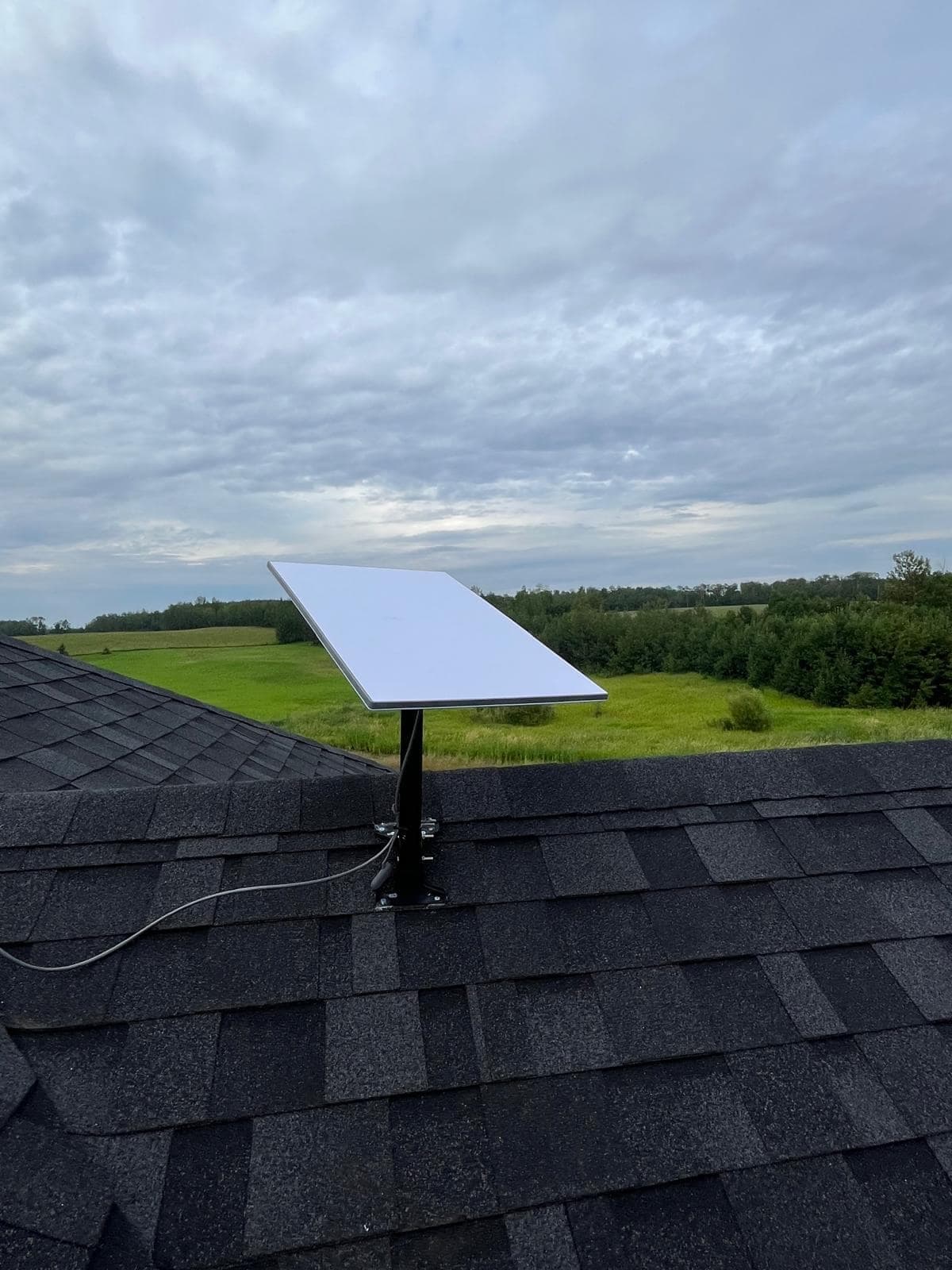
We design remote deployments around those constraints. That usually means combining what is actually available at the location — Starlink where the sky is clear, cellular where a tower is reachable, both where reliability matters — behind a router that manages the links and can be reached remotely when something needs attention. Equipment goes in weatherproof enclosures rated for Alberta temperatures, on mounts that survive wind and ice, powered through protection that tolerates generator supply.
The other half is recoverability. Temporary sites end. We build deployments that can be demobilised without cutting cable out of a wall, documented so the same equipment redeploys to the next location instead of being written off.
Who This Service Is For
The situations where this work is usually the right answer.
Construction and project sites
Site trailers and offices needing working internet for drawings, scheduling, payroll and site cameras from the first week to demobilisation.
Camps and remote accommodation
Locations supporting a resident workforce, where connectivity carries operations and is also what people use to contact home.
Unmanned monitoring installations
Tank sites, pump stations, weather and environmental monitoring where data must move reliably with nobody present.
Agricultural and rural operations
Farms, feedlots and rural yards connecting outbuildings, cameras and equipment spread across a property.
What the Installation Includes
Everything below is part of a standard engagement, not a list of chargeable extras.
- Remote site assessment, including sky view and cellular coverage measurement
- Connectivity strategy using the links actually available at that location
- Starlink installation with mounts rated for open-field wind exposure
- Cellular router and external antenna installation where coverage supports it
- Bonded or failover multi-link configuration where uptime justifies it
- Weatherproof, temperature-rated enclosures for outdoor equipment
- Power conditioning and UPS suited to generator or solar supply
- Local network and Wi-Fi covering trailers, buildings and work areas
- Point-to-point links between separated buildings across a site
- Out-of-band remote management so faults do not require a site visit
- Remote monitoring and alerting on link health
- Demobilisation planning so equipment is recovered and redeployed cleanly
Our Process
How a project runs from first contact to handover.
Site assessment
We establish what the location can actually support — sky view, measured cellular signal by carrier, available power, and the physical layout to be covered.
Connectivity design
We select the link mix and redundancy level against what the site does, how long it will run and what an outage costs, and quote against that.
Mobilisation and installation
Equipment is staged and pre-configured before travel, so on-site time is spent mounting and commissioning rather than troubleshooting configuration.
Commissioning and remote access
Links are tested under load, failover proven, and remote management and alerting configured so we can act on problems before the site reports them.
Support and demobilisation
Ongoing remote monitoring for the life of the site, then planned recovery of equipment for redeployment when the project ends.
Equipment We Support
- Starlink for remote sites
- Frequently the highest-throughput option available off-grid. Mounted on ballast or driven-post mounts appropriate to open exposure rather than a building.
- Cellular routers with external antennas
- Cradlepoint and Peplink hardware with directional antennas on masts, which regularly makes a workable link out of a signal that phones cannot hold.
- Bonded multi-link connectivity
- Combining Starlink and cellular so the site survives either failing — worth the cost where an outage stops work or breaks a monitoring obligation.
- Outdoor enclosures and power protection
- Sealed, temperature-rated enclosures with surge protection and UPS sized for generator supply, because unstable power destroys more remote equipment than weather does.
- Point-to-point wireless links
- Directional links distributing connectivity between trailers, shops and buildings spread across a site without trenching cable.
Where We Work
Remote deployments throughout Alberta, including northern and access-restricted locations. Sites well outside the Edmonton region are routine work rather than an exception, and are designed from the outset to be supported remotely.
See every area we serve across Alberta- Edmonton
- Sherwood Park
- St. Albert
- Spruce Grove
- Leduc
- Fort Saskatchewan
- Calgary
- Red Deer
- Grande Prairie
- Fort McMurray
Frequently Asked Questions
Common questions about remote site connectivity in Edmonton and across Alberta.
Related Services
Work that commonly goes with this, and that we handle at the same time.
Starlink Installation
Obstruction surveys, secure mounting, weather-sealed cable entry and full network setup for Starlink dishes on homes, businesses and remote sites.
Starlink InstallationPeplink Installation
Peplink multi-WAN routers installed to combine cellular, Starlink and wired circuits into one connection that survives any single link failing.
Peplink InstallationCradlepoint Installation
Cradlepoint LTE and 5G routers installed and configured for automatic internet failover, remote sites and in-vehicle networks.
Cradlepoint InstallationCellular Antenna Installation
Directional, omnidirectional and MIMO antenna installations that turn a marginal cellular signal into a usable connection — measured, not guessed.
Cellular Antenna Installation
Request a Quote
Tell us about the site and what you need. We will come back to you with a straight answer about what the work involves and what it costs.