On-Site Server Room or Cloud — What Does Your Business Actually Need?
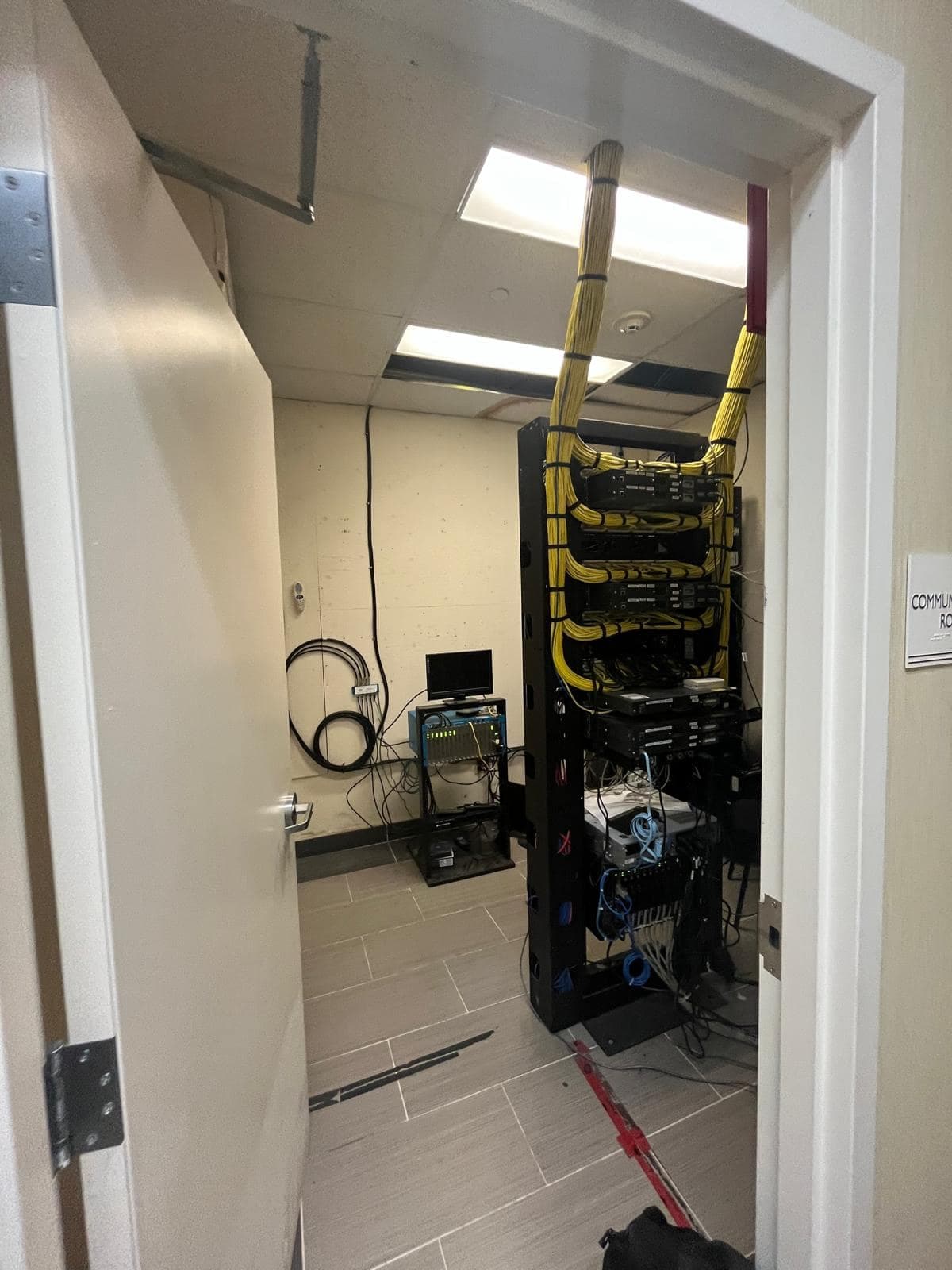
The question most businesses are actually asking
Nobody genuinely wants an on-site server room for its own sake. What people are actually asking is some version of: will my systems be reliable, will my data be safe, will this cost what I think it costs, and can I get help quickly when something breaks. On-site infrastructure and cloud services answer those questions differently, and which answers fit a given business depends on specifics that a blanket "just use the cloud" recommendation skips over.
Where cloud services are the clearly better answer
For most day-to-day business software — email, office documents, accounting, customer relationship management — cloud services are the right default now. You are not maintaining the server, the backups, or the security patching yourself, and the provider's infrastructure is almost certainly more resilient than anything a small business would build on its own. This is not a close call for most businesses, for most of these workloads.
Where on-site infrastructure still earns its place
Internet dependency is the first real factor. A fully cloud-based operation stops working the moment the internet connection drops, and in parts of Alberta that is not a rare event. A business running anything locally — even just local file storage and a local backup target — has something to fall back on during an outage that a fully cloud-dependent business does not.
Specialized software is the second. Industry-specific applications, particularly older ones common in trades, manufacturing and some professional services, are frequently not built for cloud deployment at all, or the cloud-hosted version costs substantially more in ongoing licensing than running it on owned hardware.
Data volume and access patterns are the third. A business moving large files constantly — video, CAD drawings, high-resolution imagery — can find cloud storage genuinely slower for daily work than a local server, and the upload bandwidth most Alberta internet connections offer is the bottleneck, not the cloud provider's infrastructure.
Compliance and control are the fourth, relevant to a smaller set of businesses but decisive where they apply — specific data residency or audit requirements that are simpler to satisfy with infrastructure you can physically point to and control directly.
- Unreliable or limited internet service in the area
- Industry software not built for cloud deployment, or prohibitively expensive to host that way
- Heavy local file workflows — video, CAD, large images — where upload speed becomes the bottleneck
- Specific compliance or data residency requirements
- A genuine need for work to continue during an internet outage
The honest middle ground most businesses actually land on
Very few businesses we work with end up entirely one or the other. The common pattern is cloud services for office productivity and communication, paired with a modest amount of local infrastructure for whatever genuinely needs it — a local server for the one piece of specialized software that will not run elsewhere, local storage that syncs to cloud backup rather than depending on it live, or a local network video recorder for security cameras rather than continuous cloud upload eating bandwidth.
That hybrid approach gets the reliability and low maintenance of cloud services for everything that benefits from it, without forcing the entire business to depend on an internet connection for things that do not need to.
What actually drives the cost comparison
On-site infrastructure has a larger upfront cost and a real ongoing maintenance responsibility — hardware ages, needs patching, and eventually needs replacing. Cloud services convert that into a predictable monthly cost with no hardware to maintain, but that monthly cost compounds over years in a way that is easy to underestimate when comparing it only against the sticker price of a server.
Neither is categorically cheaper. The honest comparison has to be done against your actual workloads and your actual timeline, not against a generic number either side would quote you.